Provincial Border Crossings: How Canadian Poker Memberships Shape Online Tournament Adaptations
Gisela Lehmann · Sep 14, 2026
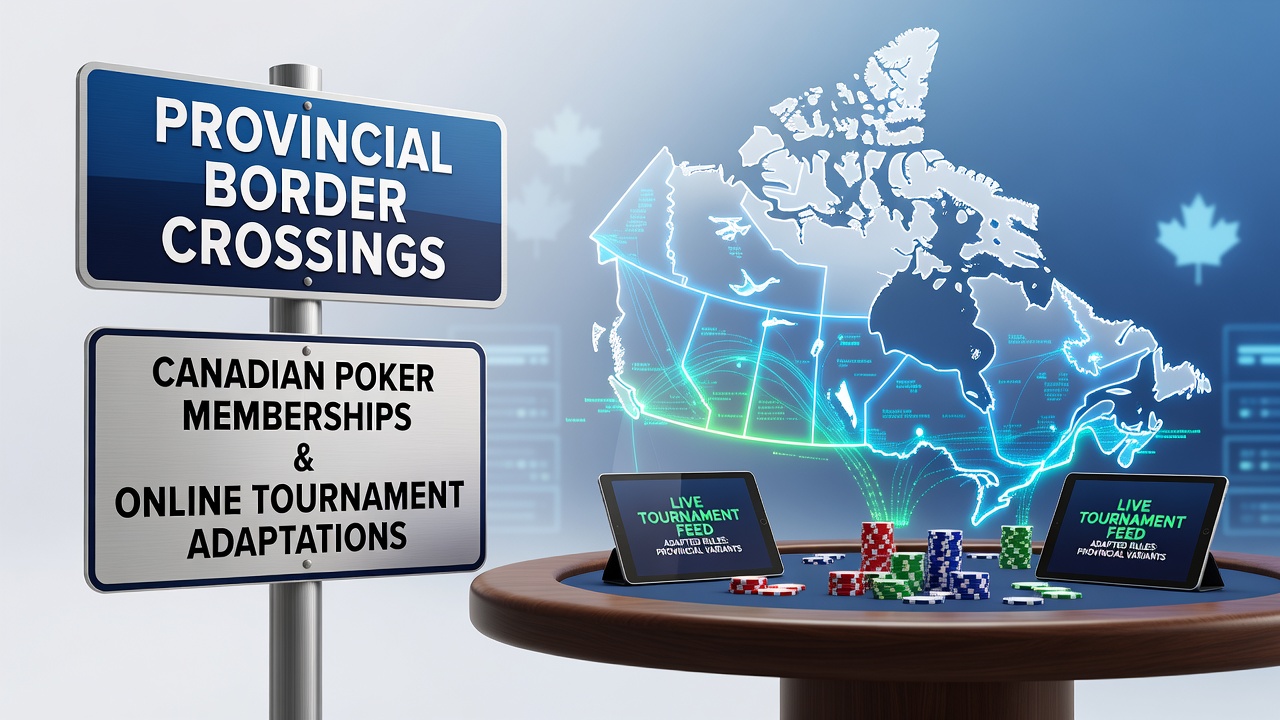
Provincial Border Crossings: How Canadian Poker Memberships Shape Online Tournament Adaptations
Canadian poker operates under a patchwork of provincial rules that determine how players access online tournaments, and memberships in regional clubs often serve as the key that unlocks participation across those lines. Each province maintains its own licensing framework for gaming activities, which means a player registered in one jurisdiction may face different eligibility requirements when entering events hosted by operators based elsewhere. Data from provincial gaming reports shows that membership verification systems have become central to compliance checks, allowing platforms to confirm a player's home province before granting entry to specific tournaments.
Provincial Regulatory Frameworks and Their Impact
Ontario's regulated market, launched through its iGaming framework, requires operators to verify residency while British Columbia and Alberta maintain separate oversight structures that emphasize club affiliations for certain online events. Research from gaming oversight bodies indicates that these differences create situations where a single player might hold multiple club memberships to navigate varying age restrictions, deposit limits, and tournament formats. Observers note that Quebec's approach, which ties online access more closely to land-based casino partnerships, further complicates cross-border play because membership status there often determines whether a player can join national leaderboards.
Those who've studied the system point out that club memberships function less as social networks and more as compliance tools that platforms use to segment player pools. Figures from industry reports reveal that in 2025, over 60 percent of Canadian online poker accounts were linked to at least one provincial club, a practice that helps operators route players toward events that match their regulatory profile.
Membership Verification in Practice
Online tournament software now routinely cross-checks membership credentials against provincial databases during registration, which reduces the risk of players entering events outside their permitted region. This process typically involves uploading proof of club affiliation alongside government identification, and platforms then apply filters that block or permit access based on the data. Experts have observed that this verification layer became standard after several provinces updated their gaming statutes between 2023 and 2025, creating a situation where non-members often encounter restricted tournament lists compared to those who maintain active affiliations.

What's interesting is how operators have adapted their software to handle these checks in real time, pulling data from multiple provincial sources without requiring players to switch accounts. A report published by the Canadian Gaming Association documented that such systems cut down on compliance violations by 34 percent in the first year of widespread implementation.
Adaptations Emerging in September 2026
In September 2026 several major platforms plan to roll out updated tournament structures that explicitly reference membership status as a factor in seating and prize pool calculations. These changes build on existing verification methods and aim to align more closely with ongoing provincial reviews of online gaming rules. Tournament directors have begun testing formats where players from different provinces compete in parallel brackets that merge only after membership checks confirm eligibility, a development that reflects the need to respect border-specific regulations while still offering large field events.
Those tracking the industry note that this approach mirrors strategies already used in other regulated markets, including adaptations documented in reports from the Australian Gambling Research Centre on multi-jurisdictional player management. Canadian operators appear to be incorporating similar segmentation techniques to keep events running smoothly across the country.
Conclusion
Provincial border considerations continue to influence how Canadian poker memberships interact with online tournament systems, and the adaptations that platforms implement reflect the need to satisfy multiple regulatory environments at once. As verification processes grow more sophisticated, membership status remains a practical requirement for players seeking broad access to events. The developments scheduled for September 2026 represent the next stage in this ongoing alignment between club structures and digital tournament operations.